
“When Your Baby Falls Sick: The Warning Signs Parents Should Never Ignore”
When a baby falls sick, parents often notice that something feels different before they know exactly what is wrong. The baby may stop feeding normally, become unusually quiet, breathe differently, or seem less active. In India, the neonatal mortality rate was 19 deaths per 1,000 live births in 2022, according to the Sample Registration System, which makes recognising serious warning signs especially important during the newborn period.
Not every illness is serious, but some symptoms should never be treated as something to simply “wait and watch."”
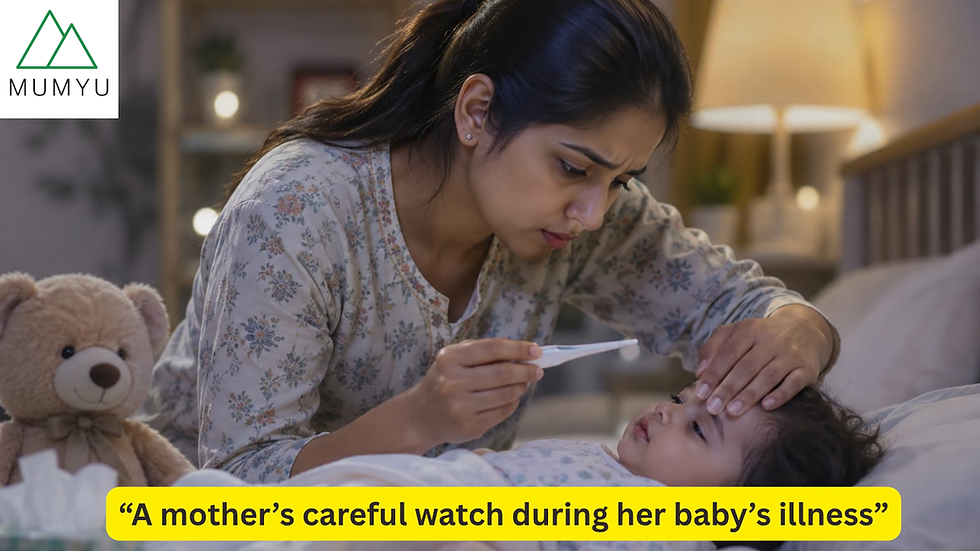
Difficulty Breathing Needs Immediate Attention
Breathing changes are among the most important warning signs in a sick baby. Parents should seek prompt medical attention if a baby is struggling to breathe, breathing unusually fast, has severe pulling in of the chest, makes grunting sounds, or has pauses in breathing.
For newborns, WHO identifies severe chest in drawing, fast breathing, grunting and other breathing changes as signs that can indicate serious infection.
When Your Baby Cannot Feed
A baby may sometimes feed less during an illness, but being unable to breastfeed or drink is more concerning.
India's National Health Mission (NHM) lists not being able to drink or feed, vomiting everything, convulsions, and lethargy or unconsciousness as general danger signs. NHM guidance says that a child with any general danger sign needs urgent attention.
If a baby cannot feed, repeatedly vomits everything, or becomes too weak to feed, parents should seek medical care promptly.
Unusual Sleepiness or Reduced Activity
Parents know their baby's normal behaviour, so a sudden change can be significant. A baby who becomes unusually sleepy, difficult to wake, floppy, or much less responsive than normal should be assessed by a healthcare professional.
A seizure or convulsion is another serious warning sign requiring urgent medical attention. WHO also lists reduced activity and fits or convulsions among important newborn danger signs.
Fever and Unusual Coldness
Temperature changes can also be important in young babies. WHO identifies 38°C or higher as a fever related danger sign in newborns and below 35.5°C as low body temperature requiring attention.
Parents should seek medical help if a newborn has either temperature extreme, particularly when it occurs with poor feeding, reduced activity or breathing difficulty.
Don't Wait When These Warning Signs Appear
Parents should seek prompt medical attention if their baby:
1. Has difficulty breathing or appears to be struggling for breath.
2. Cannot breastfeed or drink normally.
3. Vomits everything and cannot keep feeds down.
4. Has a seizure or convulsion.
5. Becomes very sleepy, difficult to wake, floppy, or unresponsive.
6. Develops a blue or grey colour around the lips or skin.
7. Has a temperature of 38°C or higher or below 35.5°C as a newborn.
8. Suddenly appears very weak or seriously unwell.
Knowing When to Act Matters
Parents do not need to diagnose their baby's illness themselves. They need to recognise when something is clearly different from normal and know when professional care should not be delayed.
When your baby falls sick, recognising the warning signs early can help parents know when it is time to stop waiting and seek medical help.


Comments