
“Why New Mothers Should Not Ignore Foot Pain and Swelling”
Becoming a mother changes your life overnight, but it also changes your body in ways that don't disappear after delivery. While sleepless nights and tired muscles are expected, foot pain and swelling are often ignored because many women assume they are simply part of motherhood. In most cases, mild swelling is a normal part of healing. However, pain that persists or swelling that feels unusual should never be brushed aside. Paying attention to these signs can help you recover comfortably and identify health concerns before they become serious.
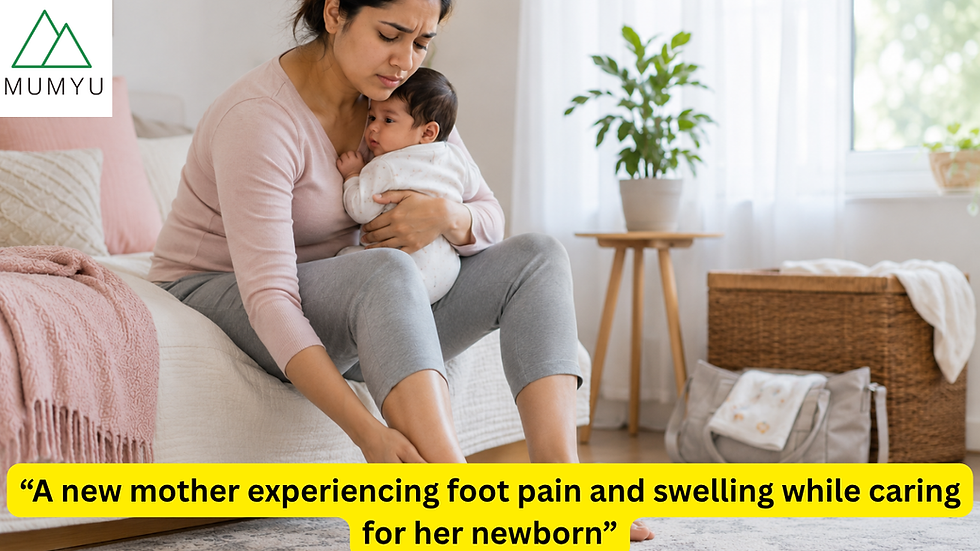
Why Do Your Feet Hurt After Childbirth?
During pregnancy, your feet carry extra weight every single day. As your baby grows, your posture changes and the pressure on your feet increases. At the same time, the hormone relaxin loosens ligaments to prepare your body for childbirth. While this is essential for delivery, it can temporarily reduce the support in your feet, leaving them sore, tired, or even slightly larger than before pregnancy.
Swelling has another cause. Your body produces more blood and stores extra fluid throughout pregnancy to support your baby's growth. After delivery, this fluid is gradually removed, but it does not disappear overnight. Until your body completes this process, fluid often collects around the feet and ankles, especially after spending long hours standing, sitting, or caring for your baby.
When Is It Time to Call Your Doctor?
Mild swelling usually improves as your body heals. However, certain symptoms should never be ignored because they may indicate a condition that needs medical attention.
Speak to your healthcare provider if you notice:
1. Swelling in only one leg.
2. Severe or increasing foot or leg pain.
3. Redness, warmth, or tenderness.
4. Swelling that does not improve with rest.
5. Chest pain or difficulty breathing.
6. Severe headaches or blurred vision along with swelling.
Getting medical advice early can help prevent complications and provide peace of mind.
Simple Habits That Can Help
Recovering from childbirth takes patience, but a few simple habits can make your feet feel more comfortable.
Elevate your feet while resting to encourage better circulation.
Drink enough water to help your body remove excess fluid naturally.
Take short, gentle walks if your doctor recommends light activity.
Wear supportive footwear that cushions your feet throughout the day.
Avoid sitting or standing in the same position for long periods.
Stretch your ankles gently to reduce stiffness and improve blood flow.
Give your body enough rest, because healing continues long after delivery.
In many Indian families, new mothers were encouraged to spend the first few weeks resting, keeping their feet elevated, and receiving gentle warm oil foot massages. These traditions were meant to support circulation and comfort. Today, modern postpartum care follows the same principle while also encouraging hydration, safe movement, and prompt medical evaluation whenever symptoms seem unusual.
Taking Care of Yourself Is Part of Taking Care of Your Baby
Many mothers feel they should ignore their own discomfort while caring for a newborn. However, persistent foot pain can affect your balance, posture, and ability to move comfortably throughout the day. Looking after your health allows you to care for your baby with greater confidence and energy.
As your body gradually regains strength, supportive postpartum clothing and recovery essentials, such as those thoughtfully designed by Mumyu, can help make everyday movement more comfortable.
Final Thoughts
Foot pain and swelling after childbirth are common, but they should never be dismissed without understanding the cause. Most mothers recover well with rest, hydration, and gentle movement, while unusual or persistent symptoms deserve medical attention. Your postpartum recovery is just as important as your baby's early days. By caring for your own body, you give yourself the strength to embrace motherhood with comfort, confidence, and peace of mind.


Comments