
"Postpartum Hair Fall: Causes & Remedies"
Updated: Apr 10
Bringing a new life into the world is one of the most beautiful experiences for a mother. But along with joy and excitement, the body also goes through many changes after delivery. One common concern that surprises many new mothers is sudden and excessive hair fall. You may notice more hair on your pillow, in the shower, or while combing and it can feel worrying.
The good news is that postpartum hair fall is completely normal and temporary. It is a natural part of the body’s recovery process after childbirth. Understanding why it happens and how to manage it can help you feel more calm and confident during this phase.
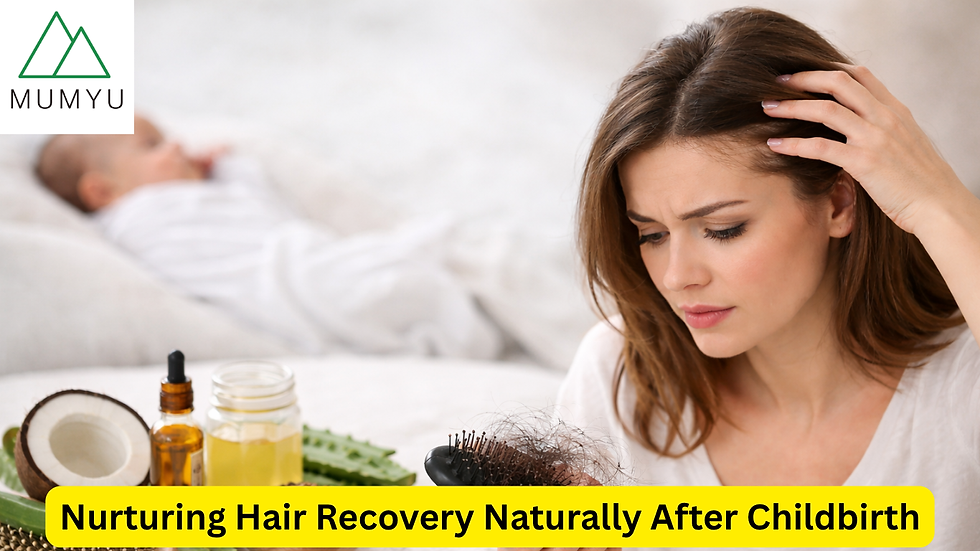
What is Postpartum Hair Fall?
Postpartum hair fall refers to the increased hair shedding that happens after childbirth. During pregnancy, high levels of hormones (especially estrogen) keep your hair in the growth phase for longer, making it look thicker and healthier.
After delivery, these hormone levels suddenly drop. As a result, the hair that was not falling out during pregnancy begins to shed all at once. This is why hair fall may feel more intense than usual. It is not actual hair loss or baldness—it is simply your body returning to its normal hair cycle.
Main Causes of Postpartum Hair Fall
1. Hormonal Changes
The biggest reason behind postpartum hair fall is the drop in estrogen levels after childbirth. This shift triggers hair shedding.
2. Physical Stress of Delivery
Childbirth is physically demanding. Whether it is a normal delivery or a cesarean section, your body needs time to heal, which can affect hair health.
3. Nutritional Deficiency
After delivery, many mothers experience low levels of iron, protein, and essential vitamins, especially if diet is not balanced. This can weaken hair roots.
4. Lack of Sleep
Newborn care often means sleepless nights. Poor sleep can impact overall health, including hair growth.
5. Emotional Stress
Mood swings, anxiety, and adjusting to a new routine can also contribute to increased hair fall.
When Does Hair Fall Start & How Long Does It Last?
Postpartum hair fall usually begins around 2 to 4 months after delivery. It may peak between 4 to 6 months and gradually reduce over time.
In most cases, hair growth returns to normal within 6 to 12 months. By your baby’s first birthday, your hair cycle is typically back to its regular pattern.
When Should You Be Concerned?
While postpartum hair fall is normal, there are certain signs that should not be ignored:
1) Hair fall continues beyond one year
2) Noticeable bald patches appear
3) Hair thinning becomes severe
4) You feel extreme fatigue or weakness
In such cases, it is important to consult a doctor, as it may be linked to issues like anemia or thyroid imbalance.

Natural Remedies for Postpartum Hair Fall
1. Maintain a Balanced Diet:
1) A healthy diet plays a key role in hair recovery. Include:
2) Iron-rich foods like spinach, beetroot, and jaggery
3) Protein sources like dal, eggs, paneer, and nuts
4) Fresh fruits and vegetables for vitamins
2. Oil Massage
Regular oil massage helps improve blood circulation to the scalp. You can use coconut oil or almond oil and gently massage 2–3 times a week.
3. Gentle Hair Care
Be kind to your hair during this phase:
Avoid tight hairstyles like buns or ponytails
Use mild, chemical-free shampoos
Avoid excessive brushing
4. Stay Hydrated
Drinking enough water keeps your body and scalp healthy, supporting hair growth.
5. Manage Stress
Try simple relaxation techniques like deep breathing, light stretching, or short walks. Even a few minutes of self-care can make a difference.
Ayurvedic & Traditional Remedies
Traditional practices can also support hair recovery naturally. Ingredients like amla, bhringraj, and methi (fenugreek) are known for strengthening hair. Warm oil massages and herbal hair masks have been used for generations to nourish the scalp.
These remedies are gentle and can be easily included in your routine without causing harm.
What to Avoid
During postpartum recovery, it’s important to avoid practices that can worsen hair fall:
1) Excessive heat styling (straighteners, curlers)
2) Chemical treatments like coloring or rebounding
3) Harsh shampoos with strong chemicals
4) Keeping your routine simple and natural is the best approach.
Self-Care & Emotional Support
Hair fall after delivery can affect your confidence, but it’s important to remember that your body has just done something incredible. Healing takes time.
Be patient with yourself and avoid comparing your journey with others. Focus on nourishment, rest, and gentle care. This phase will pass, and your hair will regain its strength.
Conclusion
Postpartum hair fall is a natural and temporary condition that many mothers experience. It is mainly caused by hormonal changes, physical stress, and nutritional needs after childbirth. While it may feel alarming, it usually resolves on its own within a few months.
By maintaining a healthy lifestyle, following gentle hair care practices, and staying patient, you can support your body’s recovery. Most importantly, remember that this is just a phase and with time, your hair and your confidence will both return.
For more useful information regarding motherhood, postpartum care, and infant health, visit the MUMYU blog your trusted companion on this beautiful journey. Here, you will find practical advice, expert insights, and genuine support all designed to help you feel confident, informed, and empowered as a mother.


Comments